Stories of People Who Find Their Long Lost Family
T im Foley turned 20 on 27 June 2010. To celebrate, his parents took him and his younger brother Alex out for lunch at an Indian eating house not far from their home in Cambridge, Massachusetts. Both brothers were born in Canada, only for the by decade the family had lived in the US. The boys' begetter, Donald Heathfield, had studied in Paris and at Harvard, and now had a senior role at a consultancy firm based in Boston. Their mother, Tracey Foley, had spent many years focused on raising her children, earlier taking a chore as a real manor agent. To those who knew them, they seemed a very ordinary American family, albeit with Canadian roots and a penchant for foreign travel. Both brothers were fascinated by Asia, a favoured holiday destination, and the parents encouraged their sons to be inquisitive well-nigh the earth: Alex was merely 16, but had just returned from a 6-calendar month student exchange in Singapore.
After a buffet dejeuner, the four returned dwelling and opened a canteen of champagne to toast Tim reaching his third decade. The brothers were tired; they had thrown a minor firm party the night before to mark Alex's return from Singapore, and Tim planned to go out later. After the champagne, he went upstairs to message his friends nearly the evening's plans. In that location came a knock at the door, and Tim's mother called upwards that his friends must have come early, every bit a surprise.
At the door, she was met by a unlike kind of surprise altogether: a team of armed, black-clad men property a battering ram. They streamed into the house, screaming, "FBI!" Another squad entered from the back; men dashed upwardly the stairs, shouting at everyone to put their hands in the air. Upstairs, Tim had heard the knock and the shouting, and his first idea was that the police force could be afterwards him for underage drinking: nobody at the party the night before had been 21, and Boston law took booze regulations seriously.
When he emerged on to the landing, it became articulate the FBI was here for something far more serious. The two brothers watched, stunned, as their parents were put in handcuffs and driven away in separate blackness cars. Tim and Alex were left behind with a number of agents, who said they needed to begin a 24-hr forensic search of the abode; they had prepared a hotel room for the brothers. One of the men told them their parents had been arrested on suspicion of being "unlawful agents of a foreign government".
Alex presumed there had been some mistake – the wrong business firm, or a mix-up over his father's consultancy work. Donald travelled oft for his job; possibly this had been confused with espionage. At worst, perhaps he had been tricked by an international client. Even when the brothers heard on the radio a few days afterward that 10 Russian spies had been rounded upwardly across the Us, in an FBI functioning dubbed Ghost Stories, they remained certain there had been a terrible mistake.
But the FBI had not made a mistake, and the truth was so outlandish, information technology defied comprehension. Non only were their parents indeed Russian spies, they were Russians. The man and woman the boys knew as Mom and Dad really were their parents, but their names were non Donald Heathfield and Tracey Foley. Those were Canadians who had died long ago, as children; their identities had been stolen and adopted past the boys' parents.
Their existent names were Andrei Bezrukov and Elena Vavilova. They were both born in the Soviet Union, had undergone training in the KGB and been dispatched abroad equally part of a Soviet programme of deep-cover surreptitious agents, known in Russian federation as the "illegals". Later on a ho-hum-burning career edifice upwardly an ordinary N American background, the pair were at present active agents for the SVR, the foreign spy agency of modern Russia and a successor to the KGB. They, along with eight other agents, had been betrayed by a Russian spy who had defected to the Americans.
The FBI indictment detailing their misdeeds was a catalogue of espionage cliches: dead drops, brush-pasts, coded messages and plastic bags stuffed with well-baked dollar bills. The footage of a plane carrying the ten touching down at Vienna airport, to exist swapped for iv Russians who had been held in Russian prisons on charges of spying for the w, brought back memories of the cold war. The media had a field day with the Bond-daughter looks of 28-twelvemonth-erstwhile Anna Chapman, 1 of two Russians arrested not to have pretended to be of western origin; she worked as an international manor amanuensis in Manhattan. Russia didn't know whether to be embarrassed or emboldened: its agents had been busted, just what other land would remember of mounting such a complex, slow-drip espionage operation in the first place?
For Alex and Tim, the geopolitics behind the spy swap was the least of their worries. The pair had grown up equally ordinary Canadians, and now discovered they were the children of Russian spies. Alee of them was a long flight to Moscow, and an even longer emotional and psychological journey.
Due north early six years since the FBI raid, I meet Alex in a cafe about the Kiev railway station in Moscow. He is at present officially Alexander Vavilov; his brother is Timofei Vavilov, though many of their friends however use their old surname, Foley. Alex is 21, his nevertheless-boyish looks offset by a serious style and businesslike apparel: black Five-cervix over a crisp white shirt. A gentle North American lilt and the careful aspiration of final consonants give him the unplaceable accent of those who have been schooled internationally – in Paris, Singapore and the Us. These days, he speaks enough Russian to order lunch, but is by no means fluent. He is studying in a European city and is here to visit his parents; Tim works in finance in Asia. (In the interests of privacy, both brothers have asked me not to reveal details about their working lives.)
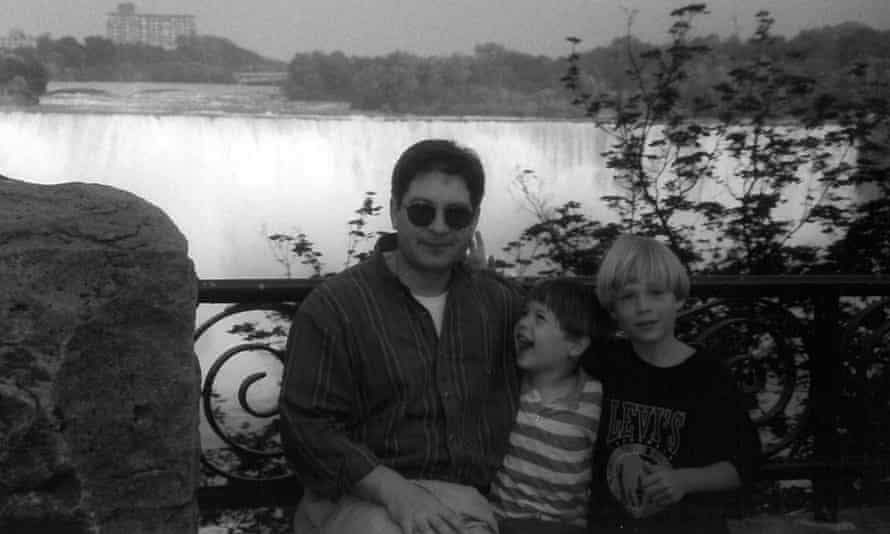
Since 2010, they have made a conscious decision to avoid the media. They have agreed to talk to me now, Alex explains, because they are fighting a legal battle to win back their Canadian citizenship, stripped from them six years ago. They believe it is unfair and illegal that they are expected to answer for the sins of their parents, and accept decided to tell their story for the first time.
As we swallow khachapuri, a Georgian bread stuffed with gooey cheese, Alex recalls the days after the raid. He and Tim stayed upward until the early on hours in the hotel room the FBI had provided, trying to understand what was going on. When they went home the next 24-hour interval, they found every piece of electronic equipment, every photograph and document had been taken. The FBI's search and seizure warrant lists 191 items removed from the Foley/Heathfield residence, including computers, mobile phones, photographs and medicines. They even took Tim and Alex'south PlayStation.
News crews held a vigil outside; the brothers sat inside with the blinds drawn, their phones and computers confiscated. Early next morning time Tim snuck out to become online at the public library and try to discover a lawyer for his parents. All the family bank accounts had been frozen, leaving the boys with just the money they had in their pockets and any they could borrow from friends.
FBI agents drove them to an initial court hearing in Boston, where their parents were informed of the charges. There was a brief coming together with their mother inside jail. Alex tells me he did not ask her what she and his father were accused of. This seems surprising, I say: surely he must have been dying to inquire?
"Here's the thing: I knew that if I was going to bear witness in court, the less I knew, the ameliorate. I didn't want to cloud my stance with annihilation. I didn't want to ask questions, because it was obvious people were listening," he says. A bouncy group of women are celebrating a altogether at the adjacent tabular array, and he raises his voice. "I refused to allow myself be convinced they were actually guilty of anything, because I realised the case would probably describe on for a long time. They were facing life in prison house, and if I was to testify, I would have to completely believe they were innocent."
The family had been planning a month-long summer break in Paris, Moscow and Turkey; their female parent told them to escape the media circus and wing to Russia. After a stopover in Paris, Alex and Tim boarded a plane to Moscow, unsure of what to await on inflow. They had never been to Russia before. "Information technology was a really terrifying moment," Alex recalls. "You lot're sitting on the plane, you have a few hours to kill and you don't know what's coming. You just sit there and call back and think."
Every bit the brothers disembarked, they were met at the plane door past a grouping of people who introduced themselves in English as colleagues of their parents. They told the brothers to trust them, and led them outside the terminal to a van.
"They showed u.s.a. photos of our parents in their 20s in uniform, photos of them with medals. That was the moment when I thought, 'OK, this is existent.' Until that moment, I'd refused to believe any of it was true," Alex says. He and Tim were taken to an apartment and told to make themselves at domicile; one of their minders spent the next few days showing them effectually Moscow; they took them to museums, even the ballet. An uncle and a cousin the brothers had no idea existed paid a visit; a grandmother also dropped by, but she spoke no English and the boys not a give-and-take of Russian.
It would exist a few days before their parents would arrive, having admitted at a courtroom hearing in New York on 8 July that they were Russian nationals. An exchange was already in the offing, and they arrived in Moscow, via Vienna, on nine July, nonetheless wearing the orange prison jumpsuits they had been given in America. My face up must requite away some of my amazement: how does a 16-year-former process such an extraordinary turn of events?
Alex smirks at me wryly. "Typical loftier school identity crunch, right?"
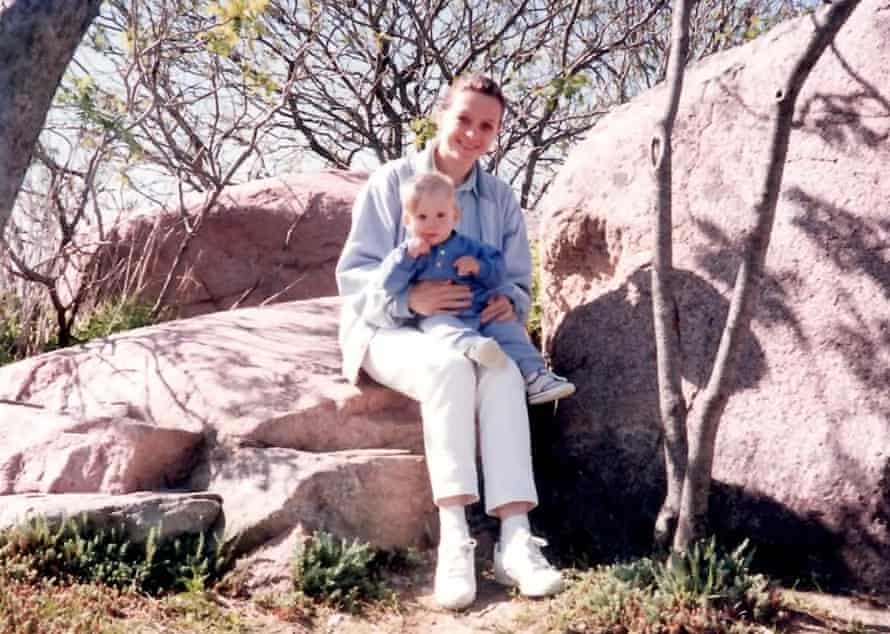
Alex and Tim'south father was built-in Andrei Olegovich Bezrukov, in Krasnoyarsk region, in the heart of Siberia. Since his return to Moscow in 2010, he has given but a handful of interviews to Russian media outlets, mainly concerning the more recent work he has done every bit a geopolitical analyst. Details of his past, or that of his married woman, Elena Vavilova, are deficient.
Alex tells me what he knows about his parents' recruitment, based on the trivial they have told him: "They got recruited into it together, as a couple. They were promising, immature, smart people, they were asked if they wanted to aid their country and they said yes. They went through years of training and preparing."
None of the 10 deportees has spoken publicly about their mission in the US, or their training past the SVR or KGB. Department South, which runs the illegals programme they were on, was the almost secretive part of the KGB. One former "illegal" tells me his preparation in the late 1970s included ii years in Moscow with daily English language lessons, taught by an American woman who had defected. He was also trained in other nuts such as communicating in code and surveillance. All the training was done on a i-to-ane basis: he never met other agents.
The programme was the simply 1 of its kind in international espionage. (Many assumed it had been stopped, until the 2010 FBI swoop.) Many intelligence agencies use agents operating without diplomatic comprehend; some take recruited second-generation immigrants already living abroad, simply the Russians have been the but ones to train agents to pretend to be foreigners. Canada was a mutual place for the illegals to go, to build upward their "legend" of being an ordinary western citizen before being deployed to target countries, ofttimes the United states of america or United kingdom of great britain and northern ireland. During Soviet times, the illegals had two main functions: to aid in communications betwixt diplomatic mission KGB officers and their U.s. sources (an illegal would be less likely to be put under surveillance than a diplomat); and to be sleeper cells for a potential "special flow" – a war between the Usa and the Soviet Union. The illegals could and then spring into action.
The KGB sent the couple to Canada in the 80s. In June 1990, Vavilova, under the assumed identity of Tracey Foley, gave birth to Tim at the Women's College hospital in Toronto. His first memories are of attending a French-language schoolhouse in the city and visiting the warehouse of his dad's company, Diapers Direct, a nappy delivery service. It was hardly James Bail, but the work of an agent has always been more tortoise than hare – years spent painstakingly edifice up the legend.
Andrei Bezrukov already had a degree from a Soviet university, simply "Donald Heathfield" had no educational records. Between 1992 and 1995, he studied for a bachelor's caste in international economics at York Academy in Toronto. In 1994, Alex was born; a year later the family unit moved to Paris. Nosotros don't know whether this was on the orders of the SVR, only it seems a rubber supposition. Donald studied for an MBA at the École des Ponts and the family unit lived frugally in a small flat not far from the Eiffel Tower; both brothers shared the only chamber while the parents slept on the sofa.
As Bezrukov and Vavilova built upwards their story, the country that had recruited and trained them ceased to exist. The ideology of communism had failed; the fearsome spy agency that had dispatched agents across the globe was discredited and renamed. Under Boris Yeltsin, postal service-Soviet Russia seemed on the verge of becoming a failed state. But in 1999, as the family unit planned a motility from French republic to the Us, a new human being entered the Kremlin who himself had a KGB background. In the subsequent years, he would work to make the KGB'southward successors of import and respected again.
With the legend of a hardworking, well-educated Canadian perfected over the years, Heathfield got into Harvard University's Kennedy School of Government towards the end of that year, and was prepare to deploy as an agent of the SVR. He would be spying non for the Soviet system that had trained him, simply for the new Russia of Vladimir Putin.
Heathfield and Foley sent their sons to a bilingual French-English school in Boston, so they could maintain their French and stay in bear upon with European civilization. They could not teach their children about Russia; possibly the emphasis on French was a fashion of ensuring their children were not "ordinary" Americans without ringing warning bells. At home, the family spoke a mixture of English and French. (An online video of Bezrukov, appearing in his postal service-deportation role equally a political analyst, shows him speaking smooth North American with the faintest of twangs.) When he completed his postgraduate caste at Harvard, Heathfield got a job working for Global Partners, a business evolution consultancy.
I speak to Tim on a Lord's day afternoon, talking to me on Skype from his kitchen. He has the same facial features and careful departing equally his younger brother, just his hair is blond rather than dark. Looking back on his youth, he tells me his father worked hard, making frequent business trips. He encouraged his sons to read and educate themselves nigh the earth, and "was similar a all-time friend to u.s.". Foley, Tim says, was a "soccer mom", picking her sons up from school and taking them to sports practice. When the boys were in their teens, she started work equally a real estate agent.
In 2008, Tim got a place at George Washington Academy, in DC, to study international relations. He focused on Asia, taking Mandarin lessons and spending a semester in Beijing. The aforementioned yr, the family became naturalised Americans, with United states passports in addition to their Canadian nationality.
The brothers would never live in Canada again; Alex had been i when they left Toronto and Tim only five – but both felt Canadian. The family returned often to ski, and when the boys went on school trips from Boston to Montreal, they took pride in showing the other students around their "domicile" state. Alex made a big fuss virtually his Canadian groundwork, because "at high school you always want to go counterculture".
Tim describes their childhood as "absolutely normal": the family was close and spent time together at weekends; his parents had many friends. He has no recollection of them discussing Russian federation or the Soviet Matrimony; they never ate Russian food, and the closest Tim says he came to a Russian was a polite boy from Republic of kazakhstan at school.
Their parents did not talk over their babyhood much, but this was how they had ever been and the boys had little reason to question it. "I never had anything shut to a suspicion regarding my parents," Alex says. In fact, he oftentimes felt disappointed by how boring and mundane they were: "It seemed all my friends' parents led much more than exciting and successful lives."
Little did he know. Bezrukov and Vavilova had been put under FBI surveillance soon after they moved to the US, probably considering of a mole in the Russian agency. Excerpts from their 2010 indictment suggest the couple lived with a level of intrigue most people would assume exists simply within the pages of a spy novel. One paragraph recounts an intercepted communication from Moscow Centre (SVR headquarters), explaining how Vavilova should program for a trip dorsum to her motherland. She was to wing to Paris and take the train to Vienna, where she would pick up a fake British passport. "Very important: 1. Sign your passport on page 32. Railroad train yourself to exist able to reproduce your signature when necessary… In the passport you'll get a memo with recommendation. Pls, destroy the memo after reading. Be well."
Their father, meanwhile, was using his piece of work every bit a consultant to penetrate Usa political and business circles. Information technology is not articulate whether he managed to access classified material, just FBI intercepts reported a number of contacts with sometime and current American officials.
In the few public remarks Bezrukov has made about his job, he makes it audio more like that of a thinktank analyst than a super-spy. "Intelligence work is non most risky escapades," he told Expert magazine in 2012. "If you deport similar Bond, you'll concluding one-half a day, perhaps a day. Even if there was an imaginary safe where all the secrets are kept, past tomorrow one-half of them will be outdated and useless. The best kind of intelligence is to sympathize what your opponent will retrieve tomorrow, non detect out what he idea yesterday."
Bezrukov and Vavilova communicated with the SVR using digital steganography: they would postal service images online that contained letters hidden in the pixels, encoded using an algorithm written for them by the SVR. A message the FBI believes was sent in 2007 to Bezrukov by SVR headquarters was decoded every bit follows: "Got your notation and betoken. No info in our files about Due east.F., BT, DK, RR. Agree with your proposal to use 'Farmer' to start building network of students in DC. Your relationship with 'Parrot' looks very promising every bit a valid source of info from US power circles. To get-go working on him professionally we demand all available details on his groundwork, current position, habits, contacts, opportunities, etc."
Fashion back in 2001, almost a decade earlier her abort, the FBI had searched a condom-deposit box belonging to Tracey Foley. There they establish photographs of her in her 20s, one of which diameter the Cyrillic imprint of the Soviet company that had printed it. The family domicile had been bugged, maybe for many years. The FBI knew the couple's real identities, fifty-fifty if their own children did non, but the Americans preferred to proceed an middle on the Russian spy band, rather than make a move.
Why the FBI finally acted is unclear. 1 proffer is that Alexander Poteyev, the SVR officer believed to have betrayed the group, felt his cover was blown. He reportedly fled Russian federation in the days before the arrests; in 2011, a Russian courtroom sentenced him to 25 years in prison for treason in absentia. Another possibility is that one of the group was getting close to sensitive information. Whatever the reason, in June 2010 the FBI decided to wrap upwardly Functioning Ghost Stories and bust the Russian spy ring.
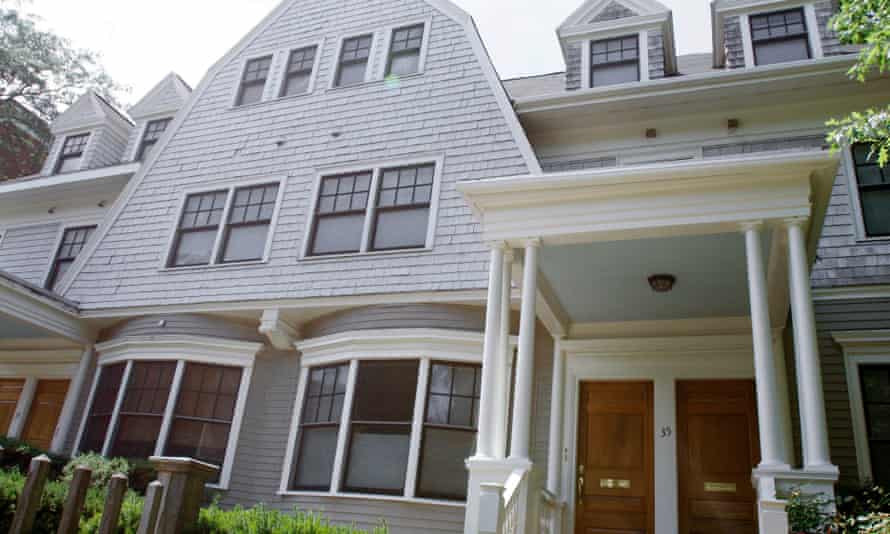
I speak to Tim and Alex many times, in person, over Skype and e-mail. They are not uncomfortable talking about their experiences, but neither do they enjoy it much. Initially, they desire to speak simply nearly their courtroom case in Canada; simply gradually they open upward, answering all my questions nigh their boggling family life.
I have to admit in that location are some details that carp me. Did they really never doubtable a matter?
In 2012, the Wall Street Journal reported that unnamed United states of america officials claimed an FBI issues placed at the family'due south Boston dwelling had picked up the parents revealing their true identities to Tim long before the arrest. Furthermore, the officials said, his parents had told Tim they wanted to groom him as a Russian spy. A second-generation spy would be a much more than impressive asset than first-generation illegals, who had built up personas that were solid but not impregnable to groundwork checks. Tim, according to the unnamed officials, agreed he would travel to Moscow for SVR training and even "saluted Female parent Russia".
Tim strenuously denies the story, insisting information technology was a total fabrication. "Why would a kid who grew up his whole life believing himself to exist Canadian, decide to risk life in prison house for a land he had never been to nor had any ties to? Furthermore, why would my parents take a similar risk in telling their teenage son their identities?"
The claim that he saluted Mother Russia is "just every bit ridiculous equally it sounds", Tim says. He would be happy to answer the allegations in courtroom, but it is impossible to argue with bearding sources. When contacted past the Guardian, the FBI declined to annotate on the Wall Street Journal article.
At that place was another affair that bothered me: was information technology really simply coincidence that the family had planned to travel to Russia that summer, and that the brothers therefore had Russian visas? Yes, Alex says. "It was very much my idea to go to Russia. We had this world map at home and when you looked at the pins on it, you could see nosotros'd been near everywhere but Russia, then I was very curious and I was pushing for it. It was just going to exist one office of our summertime trip."
In retrospect, surely, that summer trip to Paris, Turkey and Moscow must have looked rather dissimilar. When the family were reunited in Moscow in July 2010, did the boys ask their parents what the plan had been? Had they intended to reveal everything? Or were they really going to spend a week in Moscow pretending not to understand a word spoken around them?
"I really retrieve that was the programme," Alex says. "That we would travel to Russia, and maybe they might go and encounter people without us. But I don't think there was a plan to tell usa annihilation."
Tim agrees. If their parents had revealed the truth, information technology would have fabricated Tim and Alex a huge liability; "as professionals", he says, information technology'southward unlikely they would have taken the risk. They doubt their parents ever planned to tell them nearly their real identities. "Honestly," Tim says, "I really don't call back then. It sounds strange, only yeah."
Both brothers tell me they remember, as young children, seeing their grandparents. Where? On vacation, Alex says, "somewhere in Europe"; he can't remember where, exactly. Asked if he was certain the people he met were his real grandparents, he says, "I think so." Were they speaking Russian? "I was really immature, I have no thought," he says firmly.
I raise the question with Tim, who would have been older. He remembers seeing his grandparents every few years until he was around eleven, when they disappeared from his life. "Apparently, now when I think back on information technology, I kind of sympathize how it worked. If I had seen them when I was older, I would have realised that they don't speak English – they don't seem very Canadian."
At Christmas, the boys would receive gifts marked "from grandparents". Their parents told them they lived in Alberta, far from Toronto, which was why they never saw them. Occasionally, new photographs would arrive of the grandparents against a snowy properties; it helped that the climates of Alberta and Siberia are not so different.
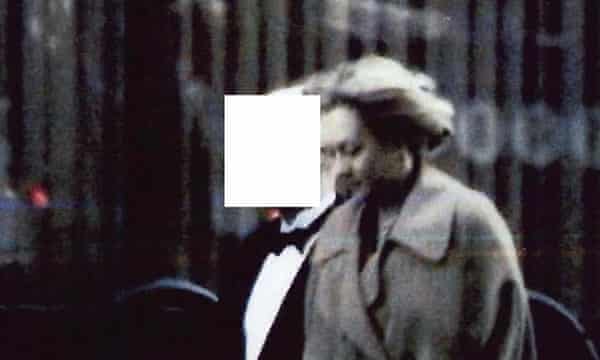
If Tim and Alex'due south story sounds eerily familiar to fans of The Americans, the tv set drama about a KGB couple living in the US with their ii children, that's because information technology's partly based on them. The testify is set in the 1980s, providing a cold war backdrop, but the 2010 spy round-upwardly served as an inspiration. The show's creator, Joe Weisberg, trained to be a CIA case officeholder in the early 1990s and, when I speak to him on the phone, tells me he always wanted to put family at the center of the plot. "One of the interesting things I saw when I worked at the CIA was people lying to their children. If you have young children, you can't tell them you lot work for the CIA. And so, at some betoken, you have to pick an age and a time, and they discover out that they've been lied to for almost of their lives. It's a difficult moment."
When I meet Alex in Moscow, he has just finished watching the commencement season. (He had started on previous occasions, but plant information technology besides difficult; he and Tim joked that they should sue the creators.) His parents like the show, he tells me. "Patently it's glamorised, all this killing people and action everywhere. Simply it reminded them of when they were young agents, and how they felt nearly existence in a strange new place." Watching information technology, Alex says, has fabricated him more curious: what set his parents off on this path, and why?
I north 2010, the spies were welcomed back to Russia every bit heroes. After a debriefing at SVR headquarters, Bezrukov, Vavilova and the other deportees met with then-president Dmitry Medvedev to receive medals for their service. Later, they met with Putin, and the grouping reportedly sang the patriotic Soviet song From Where The Motherland Begins. The authorities put on a tour: the agents and their families travelled to St Petersburg, Lake Baikal in Siberia and Sochi on the Black Sea. The idea was to bear witness off modern Russia, and to provide them with an opportunity to bail.
Do they yet meet up, I ask Alex. "From fourth dimension to time," he says. He and Tim were the only adolescents; of the four couples arrested, two had younger children, while another had developed sons. Still, the other families were probably the only people in the world who could fifty-fifty begin to understand their surreal state of affairs.
Bezrukov and Vavilova institute themselves back in a very different Russia from the 1 they had left. The oldest of the agents had been retired from active espionage work for a decade, Alex says, and barely remembered how to speak Russian. The group were told they would no longer work for the SVR, but jobs were found for them in country banks and oil companies. Anna Chapman was given a tv series and at present has her ain fashion line. Bezrukov was given a job at MGIMO, a prestigious Moscow university, and has written a book on the geopolitical challenges facing Russia.
Tim and Alex were given Russian passports at the end of December 2010; suddenly, they became Timofei and Alexander Vavilov. The names were "completely new, foreign and unpronounceable for us", Tim says. "A real identity crisis," he adds with a hint of bitterness. Unable to return to university for his last year, he managed to transfer to a Russian university and consummate his degree there, before doing an MBA in London.
Alex was less lucky. He finished loftier school at the British International School in Moscow, but did not want to stay in Russia. He applied to university in Canada, but was told he would first have to apply for a new birth certificate, and then a citizenship certificate; just then could he renew his Canadian passport. In 2012 he was admitted to the Academy of Toronto, and applied for a 4-year educatee visa on his Russian passport. The visa was issued and he planned to depart for Canada on two September. Simply iv days before he was due to go out, equally he was packing his numberless and exchanging emails with his futurity roommate, he received a call from the Canadian diplomatic mission in Moscow demanding he come for an urgent interview. The meeting was hostile; at that place were a lot of questions about his life and his parents. The visa was annulled before his optics, and he lost his university place. Alex has since been rejected for French and British visas. Twice, he has been accepted to study at the London School of Economics, but both times did non get a visa. Eventually, he was able to get a visa to study elsewhere in Europe; Tim travels mainly in Asia, where many countries can be visited visa-gratuitous on a Russian passport.
The brothers' battle to regain Canadian citizenship is not just about logistics. Moscow is not a city that embraces newcomers, and neither of them feels especially Russian. "I feel like I have been stripped of my own identity for something I had cipher to do with," Alex tells me. Both are not bad to piece of work in Asia for the time being, just want to move to Canada when they experience set up to start families. More than anything, their Canadian identity is the last straw they have left to grasp on to, subsequently so much of the rest of their previous reality vicious abroad.
"I lived for 20 years believing that I was Canadian and I nonetheless believe I am Canadian, zip can change that," Tim wrote in his affidavit to the Toronto court. "I do not accept any zipper to Russia, I do not speak the language, I do not know many friends there, I have not lived there for whatsoever extended periods of time and I exercise non want to alive there."
Everyone who is born in Canada is eligible for Canadian citizenship, with one exception: those who are born to employees of foreign governments. But the brothers' Toronto-based lawyer, Hadayt Nazami, argues that information technology is ridiculous to apply the provision to their example; the whole point of the law, he says, is to forbid those who don't have the responsibilities of citizenship from enjoying its privileges.
Ultimately, the courtroom seems to be operating equally much on emotional every bit on legal grounds, peradventure with the Wall Street Journal story well-nigh Tim'due south apparent recruitment at the back of its heed. Just even if the brothers knew about their parents' activities (and there is no hard show of this), I wondered what the court expected of them. What is a 16-year-old who finds out he is the kid of Russian spies supposed to practise? Call the FBI?
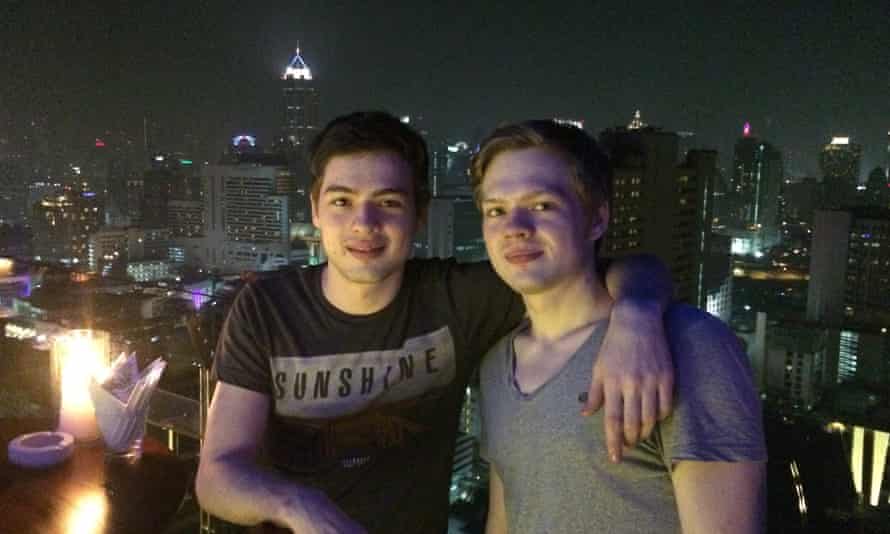
Tim and Alex take been through many months of questioning themselves and their identities, and of wondering whether they should be aroused with their parents. They don't desire their childhood to define them equally they grow older. Many of their shut friends know, only most of their casual acquaintances don't. When asked where they are from, the default response for both is "Canada".
They remain friends with many people from their previous life in Boston, though Tim says some broke off contact, mainly those whose parents were friends with his parents and felt betrayed.
While they have no wish to alive in Russian federation, both brothers visit Moscow every few months to come across their parents. I enquire them how difficult information technology has been to go along that human relationship going. Was in that location a confrontation? Tim and Alex choose their words carefully; they want to appear rational and pragmatic, rather than emotional, it seems. "Of course, in that location were some very hard times," Tim says. "But if I get angry with them, it'southward non going to lead to any beneficial outcomes." He admits it is sad that, even though he tin now spend time with his grandparents, the language barrier ways he will never know them properly. "In terms of family and keeping this whole thing together, information technology really doesn't work out well when y'all choose this kind of path," he says, his voice trailing off wistfully.
Alex tells me that he sometimes wonders why his parents decided to have children at all. "They live their lives like anybody else, making choices along the way. I am glad they had a cause they believed in so strongly, but their choices mean I feel no connection to the land they risked their lives for. I wish the world wouldn't punish me for their choices and actions. It has been securely unjust."
A number of times, Alex tells me that it is not his identify to judge his parents, but that six years ago he spent a long menstruation wrestling with "the large question" of whether he hated them or felt betrayed. In the stop, he came to one decision: that they were the same people who had raised him lovingly, whatever secrets they hid.
Source: https://www.theguardian.com/world/2016/may/07/discovered-our-parents-were-russian-spies-tim-alex-foley

Enregistrer un commentaire for "Stories of People Who Find Their Long Lost Family"